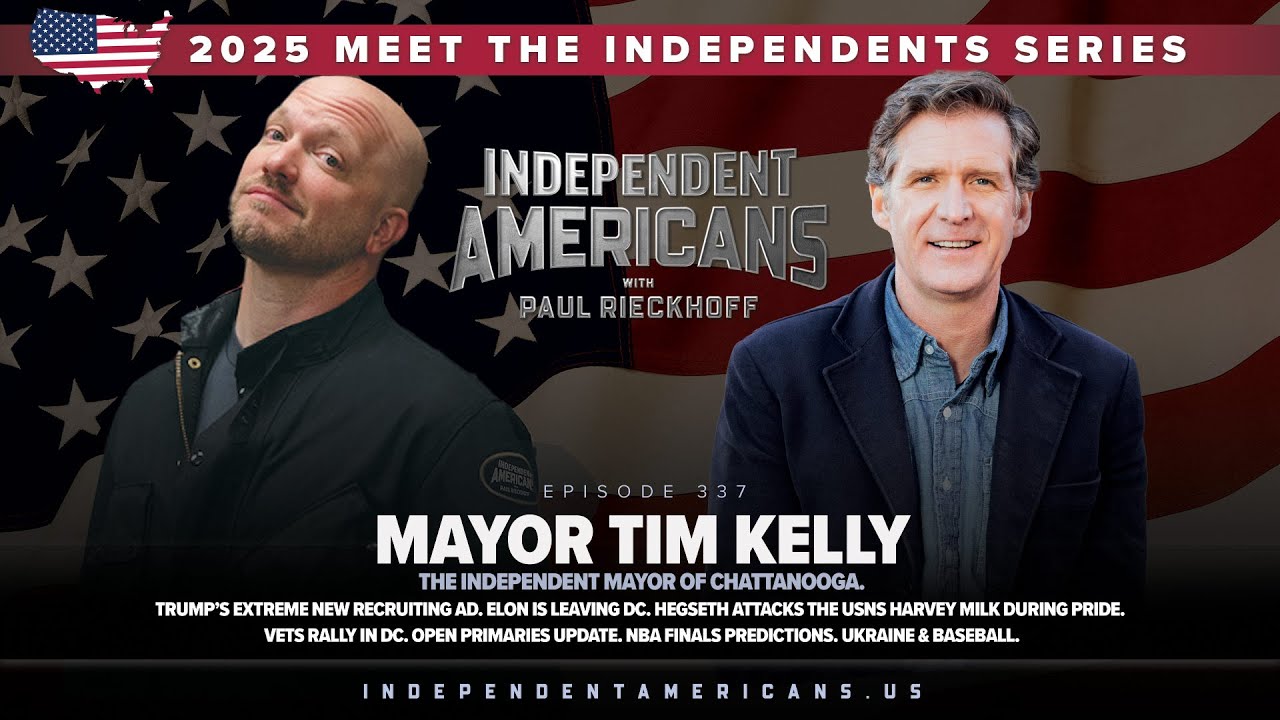
Tim Kelly is not supposed to be a politician, at least not by the traditional resume. He grew up in a military family, built a portfolio of seven businesses, sold cars, and helped bring professional soccer to Chattanooga before ever imagining himself behind a mayor's desk. He never ran for student council, dreaded public speaking, and initially dismissed the idea of running as outlandish.
What changed was 2016. Donald Trump's election jolted Kelly, not so much as a partisan event but as a cultural alarm. The leadership style—"poisonous," in his view—felt fundamentally at odds with everything he'd absorbed about service and command from his upbringing.
Around the same time, a book landed on his nightstand: The New Localism by Bruce Katz, which argued that cities, powered by revolutions in finance and technology, were becoming the most effective engines for shaping residents' lives. That idea gave Kelly a kind of sanctuary. If national politics had become toxic, maybe cities could be antidotes.
Friends began to nudge him toward a mayoral run, and his first reaction was incredulity. But the more he thought about Chattanooga's future, the more a Stephen King line haunted him: the only reason to write a book is because you can't not write it. Kelly realized that if the city "went the wrong way" under the wrong leader, he would never forgive himself for staying on the sidelines.
"The dog that caught the car."
So he did what entrepreneurs do: treated the campaign like a startup, built a bipartisan, nonpartisan team, and ran into the discomfort he'd long avoided. He won, then won again—reelected resoundingly to a second term in a city he says is "number 100" on the MSA list but feels like the center of his universe.